
How to Rent a Scooter in Phuket: Documents, Deposit and Fuel
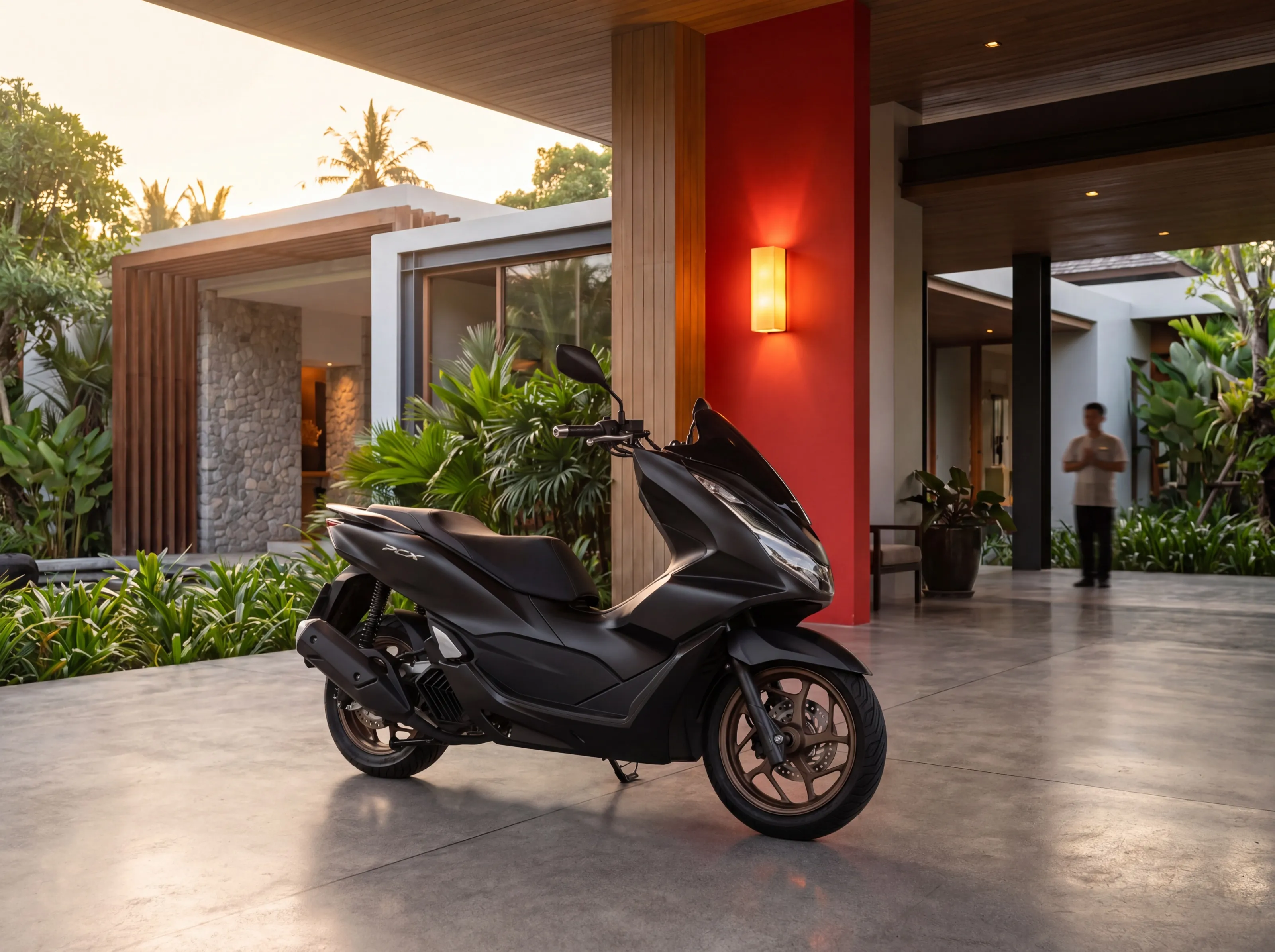
Before taking a scooter, confirm your riding documents, the total rental charge, the cash deposit, insurance and the fuel-return rule. Inspect the actual bike with the rental team and keep a record of its condition. At APARTEL, choose either a cash deposit starting from 2,500 ฿ or the passport option before handover. With the cash deposit, your original passport stays with you. This guide explains what to check before you sign and what to record when you return.
Before you book
- Send your rental dates, accommodation area, preferred model and whether you will carry a passenger or luggage.
- Confirm the exact bike, price, deposit, return time and delivery arrangements in writing.
- Check that your licence and any required permit allow you to ride that motorcycle in Thailand.
- Read the insurance conditions for both the bike and the people travelling on it.
Which documents do you need to ride?
You need a motorcycle licence valid for the vehicle and recognised for your use in Thailand. A rental agreement does not establish that your documents are valid. An International Driving Permit (IDP), where required, accompanies your original national licence; it does not add a motorcycle entitlement you do not hold.
Requirements depend on the issuing country and your circumstances. For example, the UK government's Thailand advice specifies a 1968 IDP with a UK driving licence. Check your issuing authority's current guidance rather than assuming that every country uses the same permit or validity period. Do not ride while the required documents are missing or unresolved.
Carry the required originals when riding. Read our guides to motorcycle licences and fines in Thailand and the International Driving Permit before collecting the bike.
Cash deposit and written rental terms
APARTEL's cash deposit is from 2,500 ฿. Confirm the amount for the selected bike before handover. You can instead agree the passport option before booking; with the cash deposit, your original passport stays with you.
Keep the deposit receipt and a copy of the agreement. It should show the rental dates, return location and time, fuel requirement, the agreed condition of the bike and how any additional charges will be assessed. Ask about late return, damage and the deposit-return process before signing. A handover video supports the condition record; it does not replace the contract or guarantee a particular refund.
Inspect the actual scooter before you leave
- Record the bike: photograph the registration plate, odometer and fuel gauge, then the bodywork, mirrors, exhaust and any fitted luggage box. Keep the originals and share the condition record with the rental team.
- Agree existing damage: make sure visible scratches or faults are recorded in the agreement or shared chat before departure.
- Check basic equipment together: lights, indicators, horn, mirrors, tyres and controls. Ask the team to demonstrate the start, stop, fuel-cap and seat-release controls.
- Report faults: do not accept a bike with a braking, tyre, steering or other safety concern until it has been addressed.
- Check fit: with the engine off, check that you can reach the controls and manage the bike's weight. A public road is not a place to learn to ride from scratch.
- Check equipment for both people: helmets must fit and fasten properly; a passenger needs an appropriate seat and footrests.
- Save the contact and return details: know whom to contact for a breakdown, an incident or a change of plan.
The scooter safety checklist gives a fuller inspection sequence.
How to refuel a rental scooter in Phuket
Use the fuel specified for the exact bike handed to you. Ask the rental team to show you its fuel label or matching owner manual and photograph the instruction. Do not choose a pump only by colour, model name or another scooter's fuel recommendation. Honda manuals are version-specific; an ethanol blend allowed for one version is not a universal rule for every Click or PCX.
- At handover, photograph the fuel gauge with the bike stationary and record the required return level in writing. Do not assume the agreement is full-to-full.
- Before a longer ride, check the gauge and locate a suitable petrol station on your current map. Plan a second option; a map listing does not guarantee it will be open.
- At the pump, stop the engine and show the attendant the agreed fuel specification. Follow the station's safety instructions and check the displayed amount before paying.
- Keep the receipt if you need a fuel record. On return, photograph the gauge again and review it with the rental team.
How much does a full tank cost? The amount depends on the litres actually added and the current price per litre: multiply those two values. Tank capacity is not the amount you must buy unless the tank is empty. Ask about any fuel shortfall charge before returning.
Check three separate types of cover
Ask to see the current insurance information for the bike. Thailand's compulsory Por Ror Bor scheme provides limited protection for road-accident victims' bodily injury; it is not comprehensive cover for damage to, or theft of, the rental scooter. The RVP policy information explains its benefits and conditions.
- Medical expenses: check your own travel policy for motorcycle use, licence, helmet, passenger and other conditions that apply to you.
- The rental bike: ask what damage or theft protection is included, what is excluded and what amount you may have to pay.
- Other people or property: ask which policy, if any, covers your liability and what its limits are.
Do not assume either that every incident is covered or that every policy automatically becomes void. The wording and circumstances matter. Keep the insurer's assistance details and read our Phuket scooter insurance guide.
Choosing a scooter for a passenger and luggage
Choose for the actual rider, passenger and bags. Check the permitted combined load in the manual for the bike's year and version; the limit includes people, luggage and fitted accessories. Check the storage-compartment and luggage-box limits separately. Engine size alone does not establish how much a scooter can carry.
Bring the bags you plan to use to the handover. They must fit securely without interfering with the controls, lights, passenger seat or footrests. Do not hang luggage from the handlebars. If a suitcase cannot be secured in a permitted place, arrange separate transport for it. The Honda Click 160 versus PCX 160 comparison can help you shortlist a model; the final fit check is on the actual bike.
Road conditions and parking
Wear a fastened helmet, ride sober and check the Thai Meteorological Department's Phuket forecast before setting out. Rain can reduce visibility and grip. If conditions exceed your ability, stop somewhere safe and change the plan; there is no reliable promise that a shower will finish in a particular number of minutes.
Use designated motorcycle parking and read the signs. Do not block a pavement, driveway or crossing. The west-coast route's parking guide explains kerb markings and how to plan beach stops. For shorter outings, see Bang Tao and Laguna beaches.
Return the bike with a shared record
Allow time for a joint inspection at the agreed place. Record the bike, mileage and fuel level again, return the keys and agreed equipment, and request confirmation of any outstanding balance and the deposit settlement. If there is a disagreement, compare the before-and-after records and ask for the proposed charge and its contractual basis in writing. See the deposit and return checklist.
Common rental questions
Can I rent a scooter without leaving my passport?
At APARTEL, choose the cash-deposit or passport option before handover. The cash deposit starts from 2,500 ฿; with that option, your original passport stays with you. Confirm the exact amount for the selected bike before handover.
Do I return the scooter with a full tank?
Follow the fuel level written into your agreement. Photograph the gauge at handover and return; do not assume that every rental uses a full-to-full policy.
Which petrol should I put in a Honda Click or PCX?
Use the fuel specified on the actual bike's label or in its matching owner manual. Confirm it with the rental team before refuelling; requirements can differ by year and version.
Can two people ride with suitcases?
Check the bike's permitted combined load, passenger fit and storage limits. Luggage must be secured without obstructing controls or footrests. Arrange separate transport for a suitcase that cannot be carried within those limits.
Does the rental deposit include insurance?
A deposit and insurance are separate. Ask for the bike's policy information and your contract's damage terms, and check your own medical travel cover for motorcycle use.
Is delivery free?
APARTEL offers free delivery with conditions. Send your dates and accommodation location to @apartel1 on Telegram to confirm the conditions and timing before booking.
Find local rental information for Bang Tao, Laguna and Patong.
Sources checked on 13 September 2026: the official guidance linked above and Honda's 2021 Thai PCX 160 manual. Match any manufacturer's specification to the actual rental vehicle.
Confirm your scooter and delivery
Cash-deposit or passport option, helmets and a raincoat included. With the cash deposit, the original passport stays with you. Free delivery has conditions; send your dates and location on Telegram to confirm them and the timing.
See the catalogue and pricesMessage on TelegramWhatsAppCall us